
Rotterdam, 13 October 2026 – Impact capital is increasingly being judged by the same yardstick as mainstream investment, leaving the earliest and most system-building ventures in emerging economies without the finance they need.
That is the argument of a new article for the World Economic Forum by Paul van der Linden, CEO of impact venture studio Enviu.
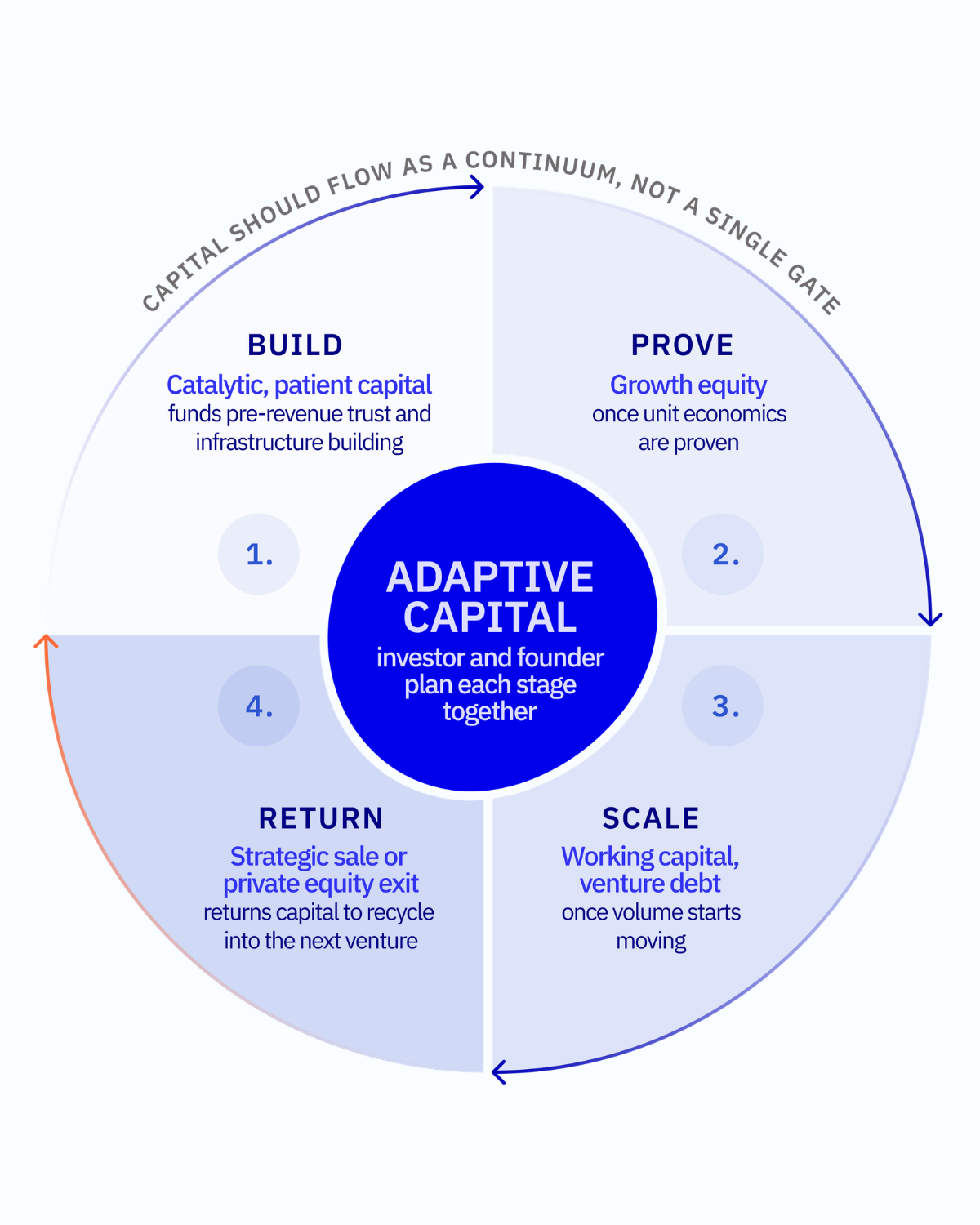
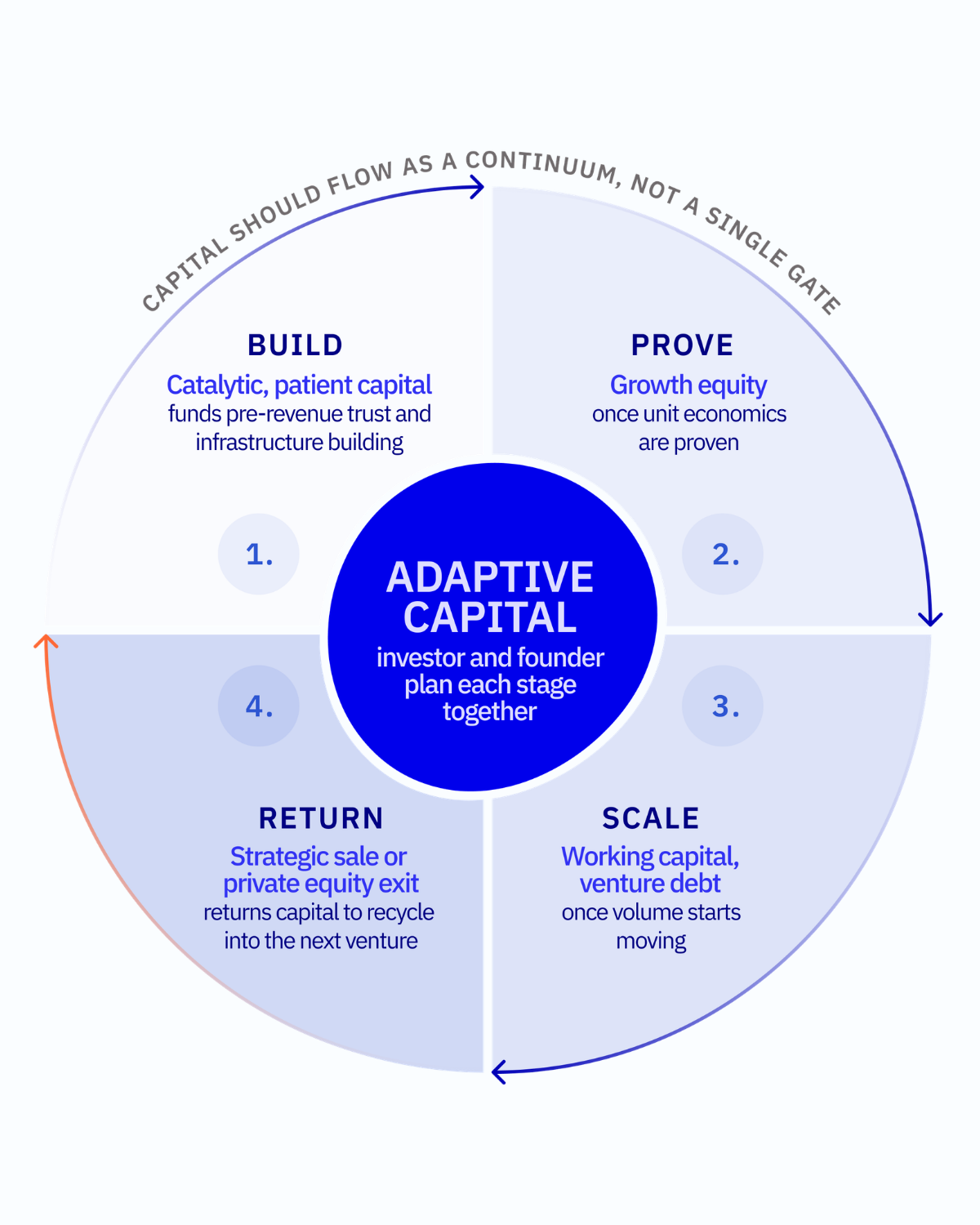
The article, How to close the financing gap for emerging-economy ventures, makes the case for adaptive capital: funding that moves with a venture through each stage of its growth, instead of a single profitability test it must pass before anything else can happen.
According to the Global Impact Investing Network's 2025 State of the Market survey, nine in 10 impact assets under management (89%) now target market-rate returns. Only 2% target anything below. The authors argue that while each fund tightening its criteria is acting rationally, a whole market doing so at once ends up avoiding the very stage it was built to fund.
The effects are sharpest in emerging economies. In East Africa, benchmarking by Dalberg and Aceli Africa found agri-SME lending carries at least twice the risk of other sectors, for returns 4–5 percentage points lower.
Across Sub-Saharan Africa, the agri-SME financing gap stands at $65 billion a year, with three in four businesses stuck in a "missing middle": too large for microfinance, not yet bankable to commercial lenders. The dismantling of USAID in 2025 and wider cuts to development assistance have deepened the gap just as impact investors pull back their own appetite for risk.
- Catalytic, patient capital to fund the pre-revenue work of building trust and infrastructure
- Growth equity once the business model is proven
- Working capital and venture debt once sales volumes start moving
- A strategic sale or exit that returns capital so it can be recycled into the next venture
The article also hold venture builders to account. Too many ventures, they write, have been designed and pitched as if they were software start-ups, when many are operational, infrastructure-heavy businesses whose markets do not develop on a typical venture fund's timeline.
Every fund that tightens its criteria is acting rationally. But when the whole market makes the same call at once, capital ends up avoiding exactly the ventures it was built to back.Before the next term sheet, I'd ask investors to sit down with the ventures they want to support and ask how the instrument could flex to fit them, not only how they should bend to fit the instrument. That's where adaptive capital starts.Paul van der Linden, CEO, Enviu
- Work out risk and return together with the people building ventures, rather than setting a bar and waiting to see who clears it
- Be honest about which parts of a business are investment-ready and which still need patient capital
- Treat "not yet profitable" as the start of the work, not the end of the conversation
- Agree on strategy up front, including whether profitability or growth matters more at each stage.
Click here to read the full article is available on the World Economic Forum website.
Paul van der Linden is available for interviews on adaptive capital, impact investing trends and financing ventures in emerging economies. To arrange an interview, contact Rachael Kirui at